

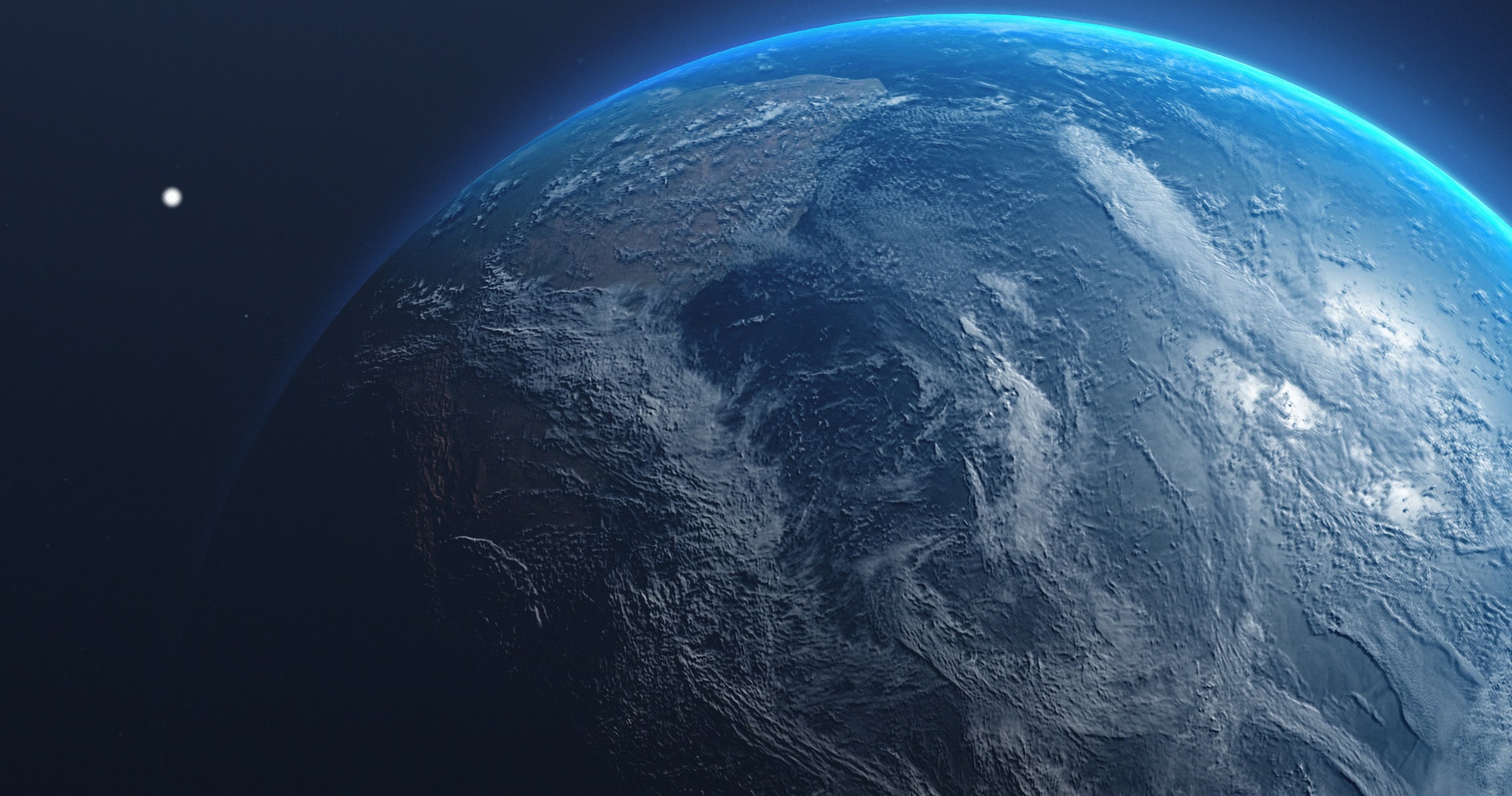
VIEWS OF THE BLUE MARBLE
An astronaut’s unique experience of seeing Earth from beyond its atmosphere elicits an unshakable sense of beauty and fragility – a crucial perspective for us all at a time when the planet’s existence is threatened by manmade climate change
From Expo 2020 Dubai's Theme Week Insights series
The near nine-minute journey into space – “shaky and bumpy but then you’re in weightlessness”, according to former European Space Agency astronaut Christer Fuglesang – may offer humanity the dramatic shift in perspective necessary to counter some of the invisible barriers separating us from each other and our planet.
“In space there is no absolute up and down,” says former JAXA (Japan Aerospace Exploration Agency) astronaut Naoko Yamazaki. “If you want to talk to each other, you have to say, ‘your up’, or ‘look at your down’. You really have to consider the other person’s position.” Simply put, in space, everything is relative.
“You are changed as a person when you’ve had this extraordinary privilege to see the Earth from above with your own eyes,” says Jessica Meir, a NASA astronaut and one of the first women to conduct an all female space walk. Suspended in the massive void of space, Meir saw a very different view of the world she had inhabited. “We quickly realise how special and how fragile it is. You see this very thin, tenuous band of an atmosphere. And there you see this bright, glowing blue ball in the blackness of space all around.”
The experience Meir so vividly describes has been shared by so many astronauts and space crew members that it has become known as the ‘overview effect’, a term coined by author and space philosopher Frank White in 1987. It describes the deep emotional and psychological shift that occurs when astronauts venture into space and look back on their home planet through the tiny port window. This view of Earth, suspended in a void, protected by nothing but a thin sliver of atmosphere, and bearing the visible signs of environmental degradation, “really instils this desire, this need, to protect it”, says Meir.
What’s not visible from space, however, are national borders and divisions along political, ethnic and cultural lines. “The thing that I felt that was so powerful when gazing back at the Earth is how interconnected everything is. We don’t see these manmade boundaries that we’ve imposed on ourselves. Those things are not part of our natural planet.”
For Meir and many other astronauts affected by the overview effect, looking back over Earth’s contiguous land masses and oceans, it is impossible to ignore the fact that we “are one human and need to work together to continue to preserve this incredible planet”.
For Fuglesang, this feeling hits most viscerally when “you can see your own home on this home planet”. Thousands of kilometres above Stockholm, Fuglesang became inescapably aware of both his place on Earth and his insignificance in the grander scheme of things. The feeling is also Meir’s most significant takeaway from her time in space. “It’s so easy for humans to get caught up in life and the things that are right in front of you, but it’s very important to remember to take that step back.”
Those who have experienced the view, impresses Fuglesang, remain struck by this feeling of awe long after the mission ends. “Once you’ve been [to space] you cannot stop thinking about it.” Perhaps, then, as we unite all our efforts to push out into the cosmos, the most significant development of the space era will be a global change in perspective that brings humanity together for the good of Earth.
You are changed as a person when you’ve had this extraordinary privilege to see the Earth from above with your own eyes
Jessica Meir, NASA astronaut
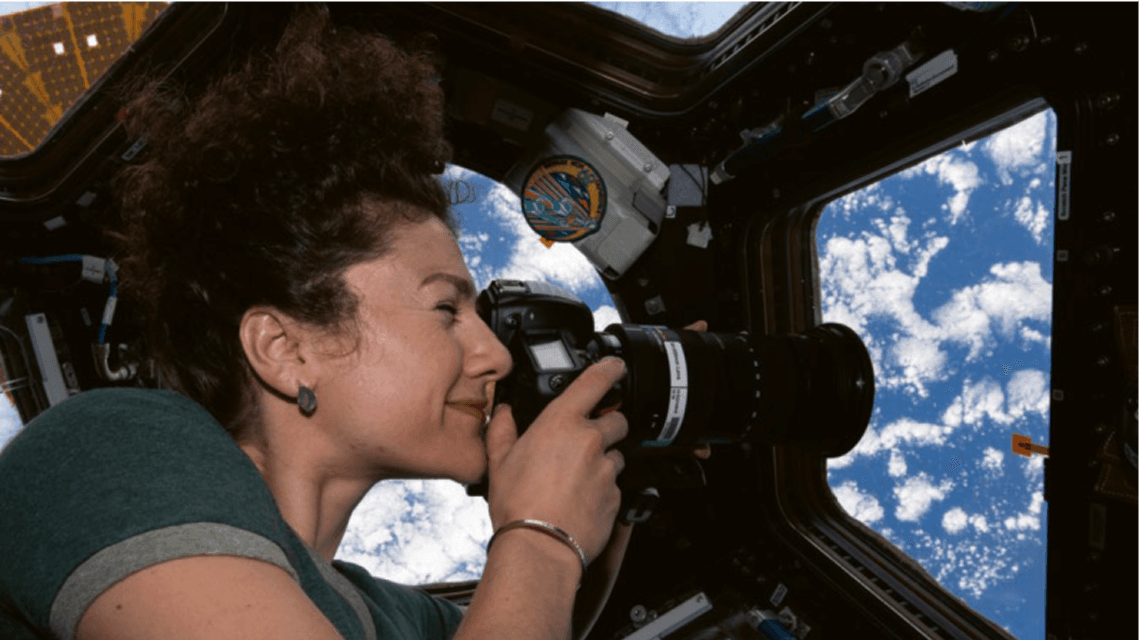
Astronaut Jessica Meir captures a photo of Earth from the International Space Station

We'd love to connect with you
For general enquiries, please fill out the contact form or send an email to impact@expodubaigroup.ae